Showing posts with label Pathfinder RPG. Show all posts

Friday, October 16, 2015

Resh-Khali: The Nations of Ash Part 2: The Phoenix

The Fortress-State of the Sun Phoenix

Located on the western bank of the northern end of the Jade Asp River Sea, the slowly rising fortress city of the Sun Phoenix shines with the sun's favor. Special sandstone blocks, found with golden flecks serve as the walls of the fortress. The white stone temple-palace of the Sun rises even about the walls, as a beacon to all travelers. Warriors with golden shields and golden swords protect stand on the walls, ready to defend the city. This is a city desperately attempting to defend against the phantom of a threat. 

The city is organized. Every block planned out, the length of every street and alley, planned exactly. The shape of every structure, designed and approved, in order to fit the proper parameters. The main street is wide enough for multiple carts to pass each other, and it leads directly to the Temple Palace of the Pharaohess, the Thrice Born Daughter of the Sun, Norah-Bennu. 

Here the streets are busy with work. People training, smiths working hard at their forges,  supplies being moved into storehouses. The streets are filled with humans, heru (humaniod avians that once served the fallen god Horus), and the largest population of halflings still living. 

The Fortress-State is one of the few places with there is an organized faith. Worship of the Sun Phoenix, as embodied by Norah-Bennu, is the religion of the land. Priestess attend the needs of the people, and holy warriors defend the nation against threats. Here, faith comes first, the other magics take a secondary role. 

That being said, there is no better place to study the element of fire. Flames are everywhere. Lanterns that never dim, braziers that fill the air with sweet wood smells, forge works, and even decorative artworks encompassing flame can be found through out the city. 

The Fortress City originally was established as a bastion by the joint Fallen Gods consisting of Horus, Bennu, Isis, Bast, and Sekhmet. Through the course of the Travails, the Gods diminished. Isis battled her rival Set, who fled to the east. She pursued, and neither have been seen again, their final fates unknown. Bast and Sekhmet got into a five day squabble over leadership of their joint followers. The two of them, despite protests from Horus and Bennu, walked into the desert to finish their argument. Neither returned. Leadership fell to Horus and his sister-wife Bennu. 

During the battles of the great beasts, the fledgling settlement was dangerously close to one of the numerous conflicts between the great desert beast, Garisik the Thrice Stinger, and the dark beast from the stars called Yhintholril the Endless Tendrils. In an effort to protect the people, both Horus, Bennu, and their champions and children Atenconin and Norah strode out to attempt something to distract the massive beasts. The powers unleashed were without measure. The valor, dedication, and devotion has seen no equal. Even the combined might of fallen gods and the loyalty of their children were no match for forces of nature, incarnate. 

Atenconin fell first, protecting his mother. Then fell Horus to one of the great stingers. As Bennu quickly gathered her husband and son, Norah stood to defend them, while her mother wove the magics to preserve them, and potentially allow their resurrection. Norah, though, was batted back, like a gnat, and she was thrown into the magics her mother was weaving. Suddenly there was an eruption of fire, scarring both of the titanic beasts. The blast caused the two titans to scatter away, and continue their battles elsewhere. 

When the flames and dust settled, only Norah remained. Stunned, unsure of what happened. Even the bodies of her parents and brother were gone. It is unknown what truly occurred on the field of battle that day. Norah returned to the fortress, but refused to be called a hero. She also announced a change of her name from Norah to Norah-Bennu, and declared herself the Pharaohess, and Defender of the people. 

Since that day, she has been a stern, but fair commander. The once skilled, but impish young woman has given way to a focused military ruler. Every person is the city is part of the city's defense. No one, save the elderly and crippled, is given free pass. If you can labor, then you labor. If you can swing a sword, you are taught to swing it better. 

Crime is punished. There is no rehabilitation. Either you learn your lesson the first time, often with a branding or loss of a limb, or you are slain or exiled. There is no third chance. 

The Fortress City boasts one of the largest military forces, and despite some occasional crusades against it's necromantic neighbors to the south, there have been no attempts at expending the nation's borders. 

That being said, the occasional paladin, priest, or other holy warrior is sent out into the wider world. Some are sent out just to see what is out there. There are rumors, though, that the Pharaohess sends some adventurers out to find a means to return her sibling and parents to the lands of the living. 


Thursday, October 15, 2015

Resh-Khali: The Nations of Ash Part 1: The Asp

While there are scattered hamlets and smaller settlements that dot the landscape where there are sufficient resources to support a few families to live together, there have been groups that have gathered to form new "kingdoms", rising from the ash and ruins of the old world.

While this is not a definitive list, this does represent some of the more powerful groups that reside on the various continents.

The Kingdom of the Golden Asp

On the eastern coast at the southern mouth of the Jade Asp River Sea, sits the capital of the nation called "Imish-ashter" (Golden Asp). It is a surprisingly grand city, built of painted stones, mud bricks homes, and even some rudimentary roads and sewage. A number of ziggurats dot the city without an easily determinable pattern. The people are tanned from the sun, wearing little more than a loin cloth or kilt, possibly with some jewelry. It is a healthy people, a rare place where learning is encouraged, and literacy is common. They have begun to cultivate the desert, creating a large enough food supplies that they can be even exported to other lands. This is an oasis in a rough world. This luxury and security does come with a disturbing price.

The kingdom is supported on the bones of the undead. Necromancy is the preferred magic of the land. Skeletons and zombies perform household duties, such as cleaning and house maintenance. Once the night falls, mummies patrol the streets, enforcing curfews and deterring thefts. Ghouls stalk the graveyards, cleaning the bones, and preparing them for "service" as an honored ancestor to either continue the labor normally filled by slaves, or to stock the military forces that protect the land from potential invaders. 

The military forces are surprising egalitarian, humans serve along side death knights as commanders. Gender is not a factor when it comes to defending the lands, and who can learn to hold a sword or cast a spell. If you are breathing, you serve your King, and defend your family. If you are no longer breathing, your service does not end. Common soldiers will return to just fill the ranks, but those who have proven themselves may return as Skeletal Champions, Death Knights, or even Wights. No one ever is returned as a vampire, though. 

The ruler of this land of the dead and living is the Great King Eternal, Sumrigal. Sumrigal is a lich, donning the finest raiment available, a tiered crown resting upon his skeletal brow. He rules with a firm grasp on his people, but he does not squeeze too tight. He protects and provides for his people. The undead tend to the crops, they assist in construction efforts, and they defend the citizens of his new kingdom. He knows that he must walk a fine line between being a tyrant and being the beneficent ruler. The necromancy taught in the schools are from his own teachings and study. He supports the arts, especially painting and poetry. He is a ruler both terrifying and understanding. He has learned his lessons. 

Millenniums ago, Sumrigal ruled his land with a tight clawed hand, fear, and power. Then a band of heroes rose up, crushed his armies, banished his demons, and in a climatic battle, fit for the greatest of operas, he was defeated. His bones and phylactery were entombed, warded and bound, never to reform, never to escape. That was before Shiva's dance. Now he is returned. The opportunity was ripe. In the chaos, the masses sought any sense of security, and his name was lost. He was not known as the evil tyrant... he was just another powerful being that had the strength and force of will to attract and defend his followers. 

Ever since then, his little fortress city-state has grown. He has had relative peace. There have been some skirmishes with the Fortress-State of the Sun Phoenix to the northern end of the Jade Asp River Sea, but they have mostly ended in stalemates. 

His greatest pain comes from the Upheaval Ridge, a series of jutted, rocky badlands that serve as refuge for bandits and raiders of a number of races. Many appear to serve the will of either the Black Fang, some sort of Gnoll demi-god, or the Red Haired One. The fact that both of these forces have used odd golems, divs and demons to booster their numbers is a source of concern. 

Smurigal does not promote a faith in his lands. He forbids the worship of himself as a god. He has found that rarely ends well. He does, though, support the worship of Death, in both the aspects of eternal peace, as well as in eternal labor as one of the Undead. Death is never given a name, never a gender, never any indication of a form. Death is Death and Death is Everywhere. The End needs nothing more to identify it. 

The Great King finds adventures a great boon to his nation. He actively supports his necromancers to travel abroad. He encourages those with special talents, to do likewise, or to travel into the wastes to discover ruins, and bring back gold and gems, lost mysteries and wisdom. It is far better to have hot blooded, unique individuals working for him, rather than plotting against him. 

Resh-Khali, the world where Shiva danced

Resh-Khali, the Great Sapphire, was a jewel in the crown of the Sun. It was a world of magic and life, of wonder and adventure.

The world has changed. Once vibrant, filled with trees and rivers, mighty cities of stone, crystal, brick, and iron dotting the landscape, the world is now covered in ash, the results of the Dance of Shiva. The clouds have broke. The Centennial Night has passed. The Sun once again bears down, hot and angry at His long exile, upon the ruins of once might races. The Moon looks forth from Her palace of stars, a mix of paradoxes, bringing hope and madness, all with the same hand.

There are those that claim that the world is now smaller than it once was. Other claim that it is now larger. Nonetheless, after the Years of the Dance of Shive, the face of the entire world has changed. Once fertile lands became deserts; huge lava fields spread across the land, creating black stoned badlands, with obsidian spires jutting out of the cooled volcanic earth. Finally, the lands cracked. some lands, formerly joined, not had a narrow lake-sea between them. Others found portions of their lands submerged into shallow seas. While even others found black ice glaciers impede on them. Finally, the southern most lands thrust northward. A land of ice and snow, uninhabitable, was suddenly thawing, becoming a lush jungle, filled with structures long hidden in the frozen encasing.

Even the Lands Below were not unaffected. Once thriving metropolis caves were suddenly filled with lava. Other caverns, filled with strange life, long forgotten, opened, their tendrils reaching forward and claiming the unsuspecting. Many races ran to the surface, as their only option. The Lands Below are now lost to the surface world. It is unknown what survived and in what condition.

No one knows what triggered the Dance of Shiva. Old men that claim to be sages argue back and forth over the cause, the death of a god, a purely natural phenomenon, or even more unlikely, an accident trigger by a single careless wizard.  Honestly, it doesn't matter. It happened, and the world suffered.

The Gods feel from the heavens, greatly diminished in their once divine might. Some attempted to rule as king, others just wandered. Most were slain by mobs of rival deities or in battles against their rivals themselves; some by their own followers, terrified and angry, lashing out at the ones who should have protected them; and some died as martyrs protecting their people from some great danger. There are few, if any, of the Divine Immortals still wandering the world. No one worships them, no one remembers their names. They are shadows of a time that is no longer of consequence.

The fires died, after a time. How long they erupted from volcanoes, fissures, and the depths of the sea is, again, another argument for old men. Both the High and Low races barely survived the cataclysm. The First Travail had ended, the Second Travail, the Gods-Purge continued, and the Third Travail, the War of Titans was about to begin.

Great beasts rose up from the depths of the oceans, the voids between stars, the sands of the deserts, the fires that erupted from the deep earth, and from the crumbling mountains that once contained them. They battled each other, amidst  the remnants of belching flames and the choking smoke. Nations that barely survived the initial eruptions were suddenly trodden underfoot of titans. Death under the claws and spines of creatures caused many to flee to caves, and beneath the ground, in desperate efforts that the strength of the earth would be sufficient to grant some safety. Where their blood fell, the land changed, becoming more fertile, or even more barren. Many of the titanic creatures were wounded, beaten, but never slain. Then, as quickly as they appeared, they crawled back into the world, or drifted back to the stars, and vanished.

Through it all, the Centennial Night left behind gifts and nightmares. Magic was once rare, the province of the few, but at the time of the Unquenchable Flames, it spread like a plague on the land. Spell casters all suddenly found magic easier to grasp. The dead rose. Dragons and other beasts long thought vanquished awoke. Oddly, outsiders; demons, angels, genies, and the like; found it difficult to enter the world, unless specifically invited, or bound to the soul of a living being.

Magic was now easier to obtain, in some ways, but all the schools of magic had been destroyed. A studied spellcaster could only learn from the spellbooks of rivals, from parchments found in ruins, writing on temple walls. The other option was to turn to another source. Dragons, liches, vampires, and other mythical beasts saw the benefits in beholden casters and would teach willing apprentices... for a price.

The Fourth Travail has only recently concluded, The Carving War. The clouds had broken, the Abandoning Sun returned. No great beasts battled and bleed, the earth was, mostly silent, with only the occasional eruption or tremor. The Centennial Night had broken, the world returned to a balanced cycle. This means that the survivors could unify and attempt to rebuild. This also returned the desire of power and greed to the world.  Great beings, men that had stolen the power of the gods, dragons, powerful undead, barbarian warlords all attempted to declare territories and kingdoms. They raided their neighbors, marched forth in armies, built fortifications, and ignited new flames, bringing death and misery to a people already weary. While there were some "great battles" fought between rivals, in the end, most people accepted their "new ruler" with just the desire to survive and not be drug further into death.

Resh-khali has seen much change. It has been only half a century since the Centennial Night broke. The world has begun to stabilize. Rough cities and towns now dot the viable landscapes. The world may never return to it's former state, but the High and Low Races survive and move forward. Tyrants rule most lands, in varying degrees of oppression. Where once magic was rare and faith common, the roles have reversed. Magic and science now are the hopes of the future, the means that the world will rebuild. Now religion is a hobby afforded to the eccentric, fools, and madmen.

Resources are still scarce, trade is dangerous, as bandits and pirates, some of them kingdom sponsored, roam the travel ways. Exploration, to make contact with far off lands that may have resources lost, is a thriving business, but also a danger. Some places are doing well for themselves, and do not wish interlopers that could bring the threat of war. Adventures dive into ruins and tombs in hope of finding lost powers to help their nation... or overthrow it for their own.

In the background, seers of all traditions have started to talk about the Fifth Travail. The rulers and leaders explain that this Travail, if it ever happens, will be many years down the line. They also use it, though, to spur paranoia and xenophobia. "We can only trust ourselves. Use others only to gain strength. When the worse happens, we will be prepared, if we are strong. The others are weak and would only drag us back into the caves."

This is the world of Resh-Khali. A world just recovering, in need of champions, in need of unity. It is also a world of paranoia, xenophobia, and anxiety, as the people look at the earth, the sea, their neighbors, the stars... wondering, waiting, dreading the day that Shiva makes the final steps of his dance.


Wednesday, August 19, 2015

Eilistraee for Pathfinder

Ah, Eilistraee... Every teenage male (and some female) gamer's fantasy goddess. Actually, she's pretty cool when you break down the character. While she has apparently returned to the Forgotten Realms with the advent of the 5e version of D&D, I don't plan on actually running in the Forgotten Realms for a while. I need to see more of what they are doing. Also, I'm financially invested in Pathfinder. 

I really just feel it's important to break down Eilistraee's basic information as a Pathfinder based deity. It should allow her to be used in any Pathfinder setting. I don't need to break down every single rite, backstory, and beliefs. Those have been done on a number of sites. I hope that this information, nonetheless, is valuable to players and GMs alike. 

----------------------------------------------------

Eilistraee

The Dark Maiden

CG goddess of song, dance, sword work, hunting, moonlight, redemption and beauty

Domains Chaos, Charm, Darkness, Good, Liberation
Subdomains Revelry, Lust, Love, Moon, Redemption, Freedom
Favored Weapon Bastard Sword
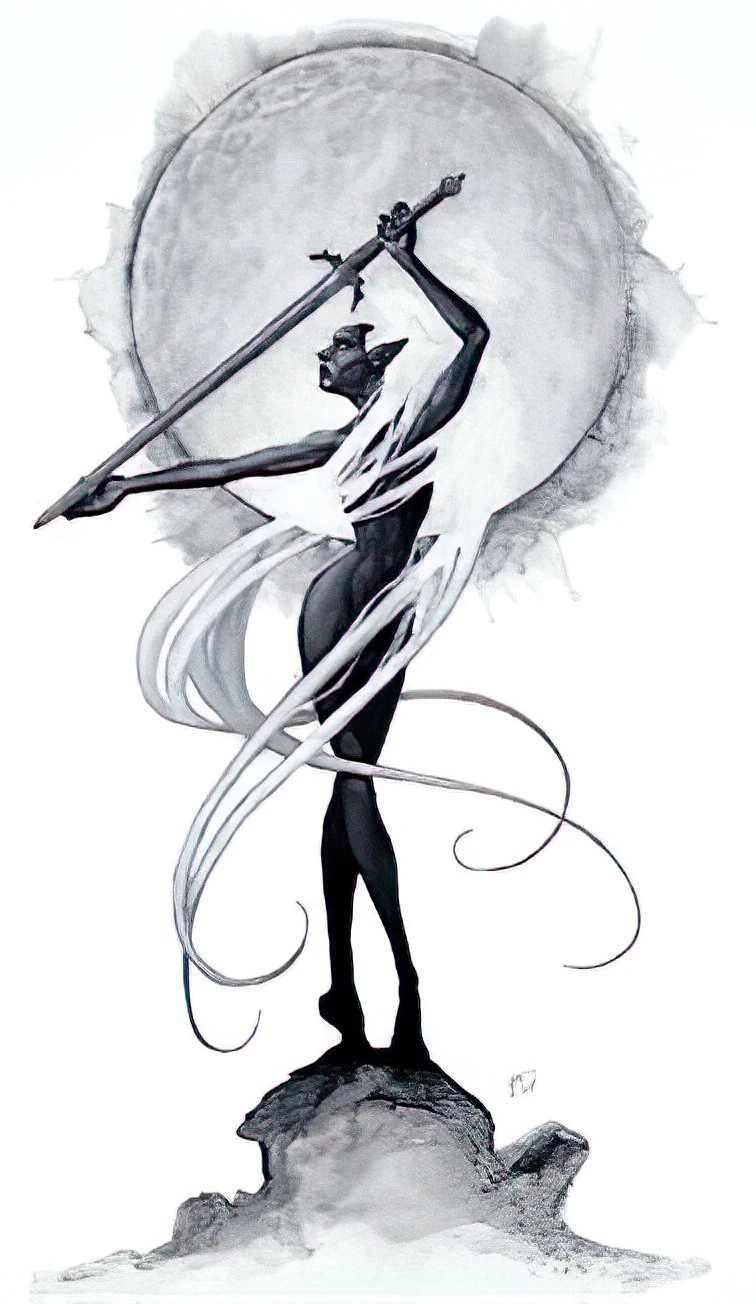
Symbol A female drow holding a bastard sword in front of a full moon
Sacred Animal wolf

----------------------------------------------------

Sword Dancer of Eilistraee Prestige Class
http://shepardgunn.blogspot.com/2013/03/the-sword-dancer-of-eilistraee.html


~~Traits~~

Moon Dancer (Combat):  You are familiar with the fluid dance of Eilistraeen warriors. You may use you Perform (Dance) skill to move through combat, in place of an Acrobatics check. Also, you gain a +1 bonus to Perform (Dance) and it is always considered a class skill for you.

Mistress of the Hunt (Religious): Having participated in the moonlit hunts with the priestess of the Dark Maiden, you have become a skilled hunter as well. You have gain a +1 bonus to your Stealth and Survival skills. One of these skills is always a class skill for you.

~~Common Racial Trait~~

A large number of followers of Eilistraee have the Surface Infiltrator alternate trait. This is due to prolonged periods of time on the surface. Priestess who regularly infiltrate Drow cities in the Lands Below do not take this trait.

~~Common Classes~~

This is not intended to limit character options, it is meant to provide guidance to players and GMs when considering Eilistraeen characters (both PC and NPC). The classes listed below are those that might be found more often than others among the followers of the Dancing Goddess.

  • Bards and Skalds - Both of these performance based classes are seen regularly in the few villages that harbor refugees and the faithful. Bards are more frequent, but skalds are found often in settlements that are regularly threatened. 
  • Clerics - This is the most prolific class, beyond a doubt. A large number of Eilistraeens have at least one level of cleric.
  • Druid - Due to the often remote nature of most communities that follow Eilistraee, some of her followers express their devotion through the path of the druid. 
    • Druids who chose a domain often select Animal, Earth, Panther or Wolf. 
    • Common Animal Companions
      • Badger/Wolverine
      • Bird (Owl)
      • Cat, big (tiger)
      • Cat, small (leopard/panther)
      • Cooshe (elven hound)
      • Elk (often as a mount)
      • Thylacine
      • Warcat
      • Wolf
    • Some that need to infiltrate the Underdark will select a giant scorpion or spider as their companions. There is some concern, though, about tempting fate with these companions. 
  • Fighter - Not surprisingly, with the favoring of sword play as part of the worship, fighters with a sword focus are very common. Cleric/Fighters are actually more common then Warpriests. 
  • Ranger and Hunter - These are also found in many Eilistraeen groups. The follow the same patterns of the Druid in regards to animal companions. 
    • Rangers normally choose the two-weapon or two-handed weapon combat styles, with a focus on swords. 
    • Rangers will choose either the companion bond or animal companion with equal commonality. 
  • Magus - Similar to their elven cousins, a number of the followers the Lady of the Dance, enjoy the interplay of sword and magic. It is one of the few arcane classes found regularly among the faithful.
  • Oracle and Shamans - Often fulfilling the purposes of advisers, diviners, and educational support. 
    • Oracles often choose the following Mysteries:
      • Ancestor
      • Heavens
      • Lunar
      • Nature
    • Shamans follow similar guidelines for their Spirits. 
  • Witch - The most common arcane caster, witches often follow the listed patrons
    • Agility
    • Ancestors
    • Devotion
    • Enchantment
    • Moon
    • Portents
    • Stars
    • Wisdom
  • Swashbuckler - Eilistraeens are sometime drawn to the daring do of the Swashbuckler. The mobility and style of these swordswomen compliment Eilistraee's interest in the sword. 
  • Warpriest - Warpriest are only slightly less common than cleric/fighters. They have access to the following blessings:
    • Chaos
    • Charm
    • Darkness
    • Good
    • Liberation
A note - Occult classes are not included on this list because I see the psychic nature of the classes as rare in most worlds. That's not to say that there's not some Eilistraeen cryokenetist, or occultist digging through lost elven cities. I just don't see them happening in every settlement. 


Tuesday, April 02, 2013

Ash Lions (The Elven Warrior Houses, part 6)

Dead-eye berserkers were another interesting idea that my friend had added to the elves of his setting. I never originally thought of battle raging elves before. It's another interesting concept that is "out-of-the-box" when one thinks of elves. Now, when my friend introduced his dead-eyed berserker elves (Which I think were highly inspired by the Crab Clan dead-eyed berserkers) he didn't have them as a House, and he didn't have a name of them. That being the case I had to come up with something that was expressing the intent of the group, and keep it elvish in sound. It also caused me to think on the small amount of back story that I wanted for this group, what was I going to write up? I also found that Warhammer Fantasy has a group of ax wielding Elves. I can't lie, I found those images combined with my ideas to be a good match. I hope that what I came up with is interesting and makes sense. I found the whole idea to be unique and a bit fun to throw together. 

(EDIT 08/31/2015: I am in the process of doing some minor adjustments to some of my previous posts. These are just going to be minor to allow for some of the newer classes, and similar.)

Ash Lions (Lith Raal)

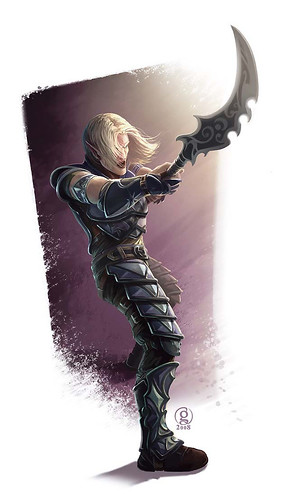
Favored Weapons: The Ash Lions prefer two-handed melee weapons, normally greataxes, with axes of all types not uncommon.

While there is no proof of this, there are those who believe that the Ash Lions, the Lith Raal, are the oldest of all the Warrior Houses. Considering the rather brutal nature of the House, the almost primitive traditions, and the fact that the Lith Raal are mentioned in a number of truly ancient elven writings, the claim has validity.

Unlike many Houses, there is no active recruitment, nor are there any stringent entry requirements. All one needs in order to become an Ash Lion is to be of elven blood and have suffered tragic loss. This loss is not always the same. One elf may have lost their "soul mate" to an assassin's blade, another may have been dishonored and banished from their clan or city, others have been excommunicated from their faith. They come from a diverse set of backgrounds, but all have the same look in their eyes, the hollow stare of the Ash Lions. The Ash Lions welcome elves and half-elves, sometimes even "quarter-elves". It's been suggested that even humans are accepted as long as they have strong ties to the elves and don't make a point of their origins, which is normally not a problem.

Ash Lions are a quiet group, not given to the usual banter of their more showy kin. Even on the battlefield, save for their battle cries, they do not speak. They are not mute, but prefer to let their blades and actions speak for them.

Many an Ash Lion dies on the field of battle, but they rarely die alone; the remains of the Ash Lion found on the top of a mound of her slain foes. This is the preferred death for an Ash Lion. Not the joyful and peaceful transcendent return to the courts of their gods, but a bloody and terrible passage purchased with the deaths of those that would do harm to the elven people, and finally with their own martyrdom in that cause.

Despite their rather morose attitudes and outlooks, the Ash Lions are respected for their skills on the battlefield. The Ash Lions do not throw their lives away meaninglessly. A death is not enough, it must be a death that means something. As such, the Ash Lions practice their martial talents are religiously as a cleric practices his devotion. An Ash Lion slain outside the battlefield, either by assassination or natural causes, is an Ash Lion that is forgotten. As such, many Ash Lions not only server in militias and armies, but are frequent adventurers, looking to reclaim lost relics and glories of the elves from the annuals of history.

Traditional Colors: White and gray are the colors of choice for an Ash Lion. Frequently a lion motif is incorporated into their armors and weapons. An Ash Lion who wears the pelt of a white lion is often seen as chosen for a particularly glorious death.

Associated Classes: All Ash Lions have levels in either barbarian, bloodrager, or the exceptionally rare skald. They may have had other classes previous to becoming an Ash Lion, but once joining the House, their old life dies and they devote themselves to their new path. Also, if they had an animal companion from another class, the previous companion is released and a lion (often white in color) comes

Trait: The Lion's Eyes (Elf, Combat) - Your heart knows only rage, fear means nothing to you, death is a close companion, and your eyes show it. You are immune to fear. Also, you gain a +1 to Intimidate checks, and Intimidate is a class skill for you. On the downside, you are -2 on all Charisma based checks to improve someone's attitude towards you. Your eyes show no empathy or pity.

Howling Wolves (The Elven Warrior Houses, part 5)

This is one of the Houses that I've been waiting and wanting to do from the beginning of this little side project. This house resides in one of my many soft spots in my heart, due to it's real world origin. This group was created due to the efforts of my wife's first incarnation of her favorite drow character, Yasreana. That poor character, I have killed her so many times over the years, over so many reboots, revisions, and redo's. I digress, though. Simply, this was one of her many early achievements in my friend's game. Oddly, I find that it's an achievement that I've not actually properly duplicated, I think, in any of the games I have run for her since. I'm not sure why. 

Nevertheless, as a somewhat form of penitence I now present the Pathfinder version of the Howling Wolves House, for all the world to see. 

Howling Wolves (Ngwawal Draugi)

Favored Weapons: Howling Wolves prefer bastard swords, longswords and shields.

One of the newer Warrior Houses, The Howling Wolves are one of the most controversial of the Houses as well. Specializing in close quarters and urban combat, they are extremely effective in fighting in the streets of the elven cities, and fighting in the tunnels and passage ways of dungeons and the World Beneath.  It is not their skills that cause the talk and whispers, but the founder of the House.

The House was founded by a drow. The daughter of an elven noble lady and her would be drow assassin, the founder fought for her life almost from conception. After a number of travails, trials, and difficulties, she managed to assist in the defense of one of the larger elven cities against a combined demonic and drow assault. For her valor in defense of the inhabitants of the city and the protection of the Queen, she was granted a boon from the Queen. From that boon, the Howling Wolves were born.

The Wolves train in techniques that have been gathered over the varied career of the House Founder. It seems only natural that some of the techniques that she learned while a gladiatorial slave, and her training in the styles of the religious order that she belongs to, would have a heavy influence on the fighting styles of the house. Their use of the shield in conjugation with swords makes them great phalanx fighters. They also have a large number of divine casters among their ranks which help greatly in the survivability and durability of a group of fighters. Also, the fact that they openly accept elves, half-elves, and "elf-friends" adds them a bit more flexibility and the ability to fill their ranks faster than the "traditional" Houses.

Training focuses not just on martial skills, but also heavily on tactical skills. A "cub" learns to fight both alone, and as a unit. By the time that they graduate, most "pack mates" are flexible, professional, and utterly loyal to the elven royalty, their house, and to each other. Despite the "black mark" that some would claim is on this House, due to it's founding, there is little debate that you will find fewer more loyal and ardent defenders of the elves and their allies then the Howling Wolves.

Traditional Colors: The Howling Wolves wear black with silver highlights, occasionally with white accents. All are issued a black shield with a silver wolf's head on the face of the shield. While not required, most will modify future shields to mirror this motif.

Associated Classes: The vast majority of Howling Wolves come from the ranks of cavaliers, clerics, fighters, magus, and martially minded oracles.

Trait: The Pack Stands Together (Combat, Elf) - A member of the Howling Wolves grants an additional +1 bonus when using the Aid Another ability. Also, they receive a +1 bonus to Knowledge (History) and Perception checks. One of these skills is considered a class skill.

Dancing Wasps (The Elven Warrior Houses, part 4)

While this group was never an original "House" created by my friend, the idea of an "Elven Duelist" house has actually been in a number of my games for quite some time. I figure I would include them here. I find that Duelist based games are an interesting sub-section of the standard gaming set up. Not normally meant for a standard group, these type of games are a bit heavier on a single combat per session. While a normal RPG session may have three or four combats that occur, I have found that a duelist game may have one combat between two duelist that may take up the entire session. Maybe I'm not running it as effectively as I could be; and the Ultimate Combat book wouldn't be out for a number of years; but these games are high on the drama, high on the intrigue, and then heavy on the one duel. LOL I may actually put forth some more Duelist styles and such at a later date. There's an old WotC duelist write up. I wonder if I could find that sometime and do a Pathfinder update on it? Hmm... 

Originally, I was going to call this the Dancing Serpents. For some reason, though, it just wasn't really fitting well with me. Then, while I was in the middle of other things, it kind of hit me. Serpents really don't properly represent the sudden, fluttering movements that I envisioned with this House. While a snake strikes, I need something that strikes and then strikes again, just as suddenly and quickly as the the first strike. In Pathfinder, the elves are also tied to a wasp goddess, so this added to where I wanted to go with this House.  I then pondered Drow for a moment, and realized how many wasp vs. spider nature segments I had seen on TV. Things evolved from there. 

Dancing Wasps (Salkal Calar)

Favored Weapons: Dancing Wasps prefer "elegant" blades, such as the dagger, longsword, rapier, scimitar, short sword and similar weapons.

With only the Striking Crane coming close in outward shows of skill, the Dancing Wasps are the House most commonly thought of when one thinks of an "elven duelist". Masters of sudden darting strikes, graceful dodges, and arcane talent, the Dancing Wasps are (in their opinion) the pinnacle of the duelist art form. Of course, there are many differing opinions on that assertion but generations of perfecting a blending of blade and magic have created an unquestionably impressive and deadly style.

Pulling from a large pool of young, eager, glory-hunting nobles, all eager to demonstrate the elvish ideals of perfection in swordcraft and spellcraft, the ranks of the Dancing Wasps are filled with recruits ready to defend the honor of the "elven nation" at the merest provocation. This has given the House a deserved reputation of hotheads and braggarts. Fortunately, though, as an elf progresses within the House, their fevered zeal cool while their skills improve. Heads of houses are often observant, cunning, calculating, and among the most feared duelist of the region, city, or realm.

The darting, quick moving, and never stopping style of the Dancing Wasps is amazing to watch and difficult to defend against. If one masters this difficult style, they can easily gain a reputation and personal wealth as duelist for hire. Such mercenaries traditionally only accept employment of an elven noble house, but there have been those less scrupulous members have accepted employment in any "noble" cause willing to pay.

Many Houses have special distinctions and badges of honor, few, though, have the reputation of those that receive the title of Spider-Slayer Wasp. This distinction is given only to a member of the order that has personally slain a drow in single combat. It is a very coveted award, and those that have received this commendation are seen with awe and admiration among the younger elves. It is important to note, though, that all that needs done is to kill a drow, it does not matter the reason why or what condition the drow is in before the fight begins. It just has to be a "one on one fight". This has caused whispered concern that some Spider-Slayer Wasps are nothing more than bullies and cowards. The general belief of the elves, though, is that a dead drow is still a dead drow, and thus the only good type of drow. (There have been some unsubstantiated rumors that a collective of drow have started to become "Wasp-Hunting Spiders", but other than whispers and a few missing duelist nothing have been confirmed.)

Traditional Colors: Each duelist has their own unique style and sense of fashion, but most will include gold and black, frequently in a wasp motif to signify their allegiance to the House.

Associated Classes: Bards, Magus and multi-classed wizards and sorcerers with levels in fighter, swashbuckler, or rogue are the most common members of the House. There have been reports of a coven of multi-classed witches have started training in the House, as well.

Trait: Stance of the Wasp's Sting (Elf, Combat) - When wielding one of the favored weapons of the Dancing Wasps, the duelist gains a +1 to his combat performance, concentration and Acrobatic skill checks.

Roaring Bear (The Elven Warrior Houses, part 3)

Friends make some odd choices at times. Not necessarily bad choices, just odd ones. (They still also make stupid choices sometimes as well, but that's not what the intent of this little diatribe is.) One of the odd choices my friend made was the creation of the Roaring Bear house. Brawling, pro-wrestling elves didn't make a lot of sense to me. It's been kind of difficult to wrap my head around this house. Elves are not known for their brawn. They are known for their tie to nature and the fae, so that's kinda where I decided to go with this one. 

Roaring Bear (Raavea Morko)

Favored Weapons: Bare hands, natural weapons, hand axes, kama, and daggers.

One of the more obscure Warrior Houses, the Roaring Bears are rarely found in great numbers. Traveling alone, or with a single apprentice, Roaring Bears regularly travel from settlement to settlement, helping out the locals against what ever problems the travelers come across upon their arrival. Roaring Bears serve often as temporary advisers, healers, as well as defenders to the community that they decide to rest at, and as such are rarely turned away by a sane ruler. Their reputation is such that they frequently are found in a wide variety of settlements, regardless of the racial majority, promoting understanding and harmony with their elven neighbors and nature in general.

The most esoteric of Warrior Houses, they are more akin to a monk tradition more than a martial house. Roaring Bear training houses are never found inside a city. Instead, they are normally in deep forests, mountain valleys, or as a rest house at some out of the way oasis. Often, the only entry tests needed to join are to arrive at the Training House and prove your worth (which is understandably easier for some than others). Elven heritage has a strong weight on one's "worthy" but even having one-quarter elven blood is sometimes acceptable. Once granted entrance, the applicant begins the decades-long training required to become a Roaring Bear, learning both unarmed combat as well as the druidic abilities that give the order it's name. It is the only house that requires training as a specific classes before allowing an initiate to go out into the world.

Traditional Colors: Most Roaring Bears wear dark brown with silver and black accents, similar to the colors found on a grizzly bear.

Associated Classes: All Roaring bears have levels in either Druid, often with the Bear Shaman archetype, or Shaman with the Nature Spirit; and levels in Monks or Brawler.

Trait: Necessities of the Bear (Elf, Religious)- A druid member of the Roaring Bears can use monk weapons without violating their vows. A Roaring Bear can level both Monk and Druid without restriction, but only these two classes, and one or the other must be the favored class. Finally, a Roaring Bear is trained to care for themselves and others, they gain a +1 bonus to Heal and Survival checks. One of these skills is always considered a class skill.

Hounds of the Wild Hunt (The Elven Warrior Houses, part 2)

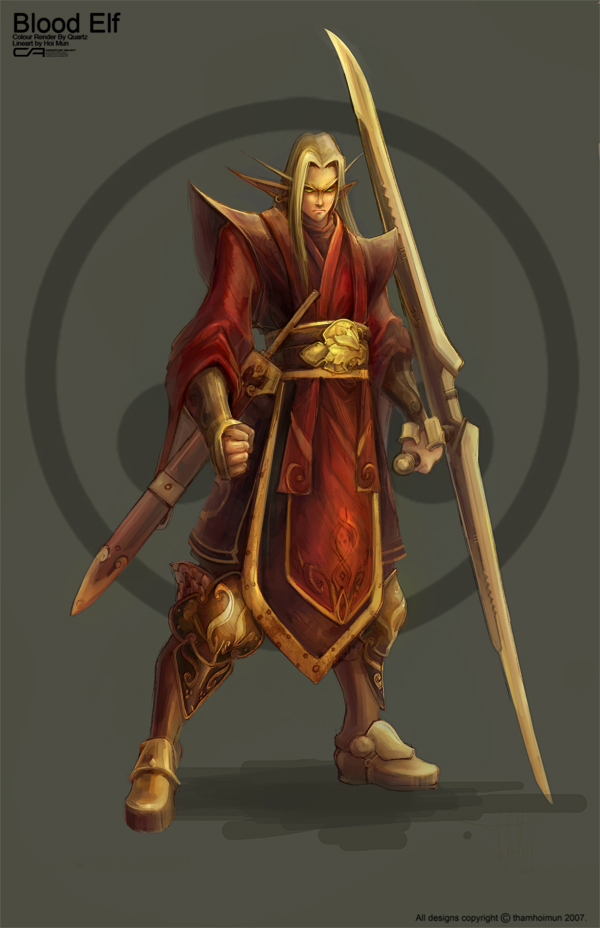
My friend originally called this group "Hellhounds". When I decided to flush out this group, I decided to change the name. The main reason for this was because I don't see elves (except maybe the Blood Elves in WoW) naming any group after anything demonic. I mean, in most fantasy settings, demons and devils have been major thorns in the proverbial elven side.

With that being the case, I decided to look into what my friend was attempting to present in his original concept, and keep with that spirit and theme. The group had "howls" that affected the enemy, they were running dual-wielding swordsmen, and seemed to favor pack tactics. They sounded more like wolves, but there's already a group named after wolves. I then decided to tap into my disturbingly vast mental library of mythology. Since elves have been commonly tied to or associated with Celtic mythology,  I decide to use the Wild Hunt (one of my personal favorite myth references) as the basis for this group. Thus the Hell Hounds have become the Hounds of the Wild Hunt. 

Hounds of the Wild Hunt (Draug i'en' Merka Fera)

Favored Weapons: The Hounds prefer swords that can be wielded effectively in each hand, thus longswords, scimitars, shortswords, and daggers are the preferred weapons of choice.

Often found patrolling the forests and woodlands that serve as the boarders of many elven territories, the Hounds of the Wild Hunt are one of the most commonly encountered Warrior House traditions. They are also the most "down-to-earth" and open minded of the traditions. It is said, with some derision,  that the Hounds will accept anyone into their ranks. While this is not necessarily the case, they will accept any elf, half-elf, and even "elf-friend" (humans, halflings, and gnomes that have been granted elevated status by the leadership of the elves), that proves their mettle to the house. There are even rumors that a small group of "redeemed" drow can be found among their number. This last statement (accusation) has never been confirmed nor proven, and to openly suggest it is considered slander and an open invitation to a duel, if the Hound is being civil, or an out-right attack more oft.

The Hounds of the Wild Hunt are also a practical group that understands that wars are not always won with the massive overt clash of spell and steel. They grasp the value of the sudden surgical strike against supply trains and the removal of important figure heads. It is this willingness to accept these messy facts that contributes to their success, but also turns away most High Elves; causing the other Warrior Houses to consider them to be a "lesser" house. This attitude is very prevalent among the finer members of elven high society, despite the fact that one of the more admired Elf-Queens spent most of her young adult years among the ranks of the Hounds.

While many of the Warrior Houses like to hone the mastery of the individual, the Hounds perfect the "pack" over the whole. It is rare to find a "Hound" operating on her own. This fact is the cause of the common idiom in lands that border elven territories that you never have to worry about the elf that you see, it's the elves that you don't see that will get you.

Traditional Colors: Not ones for the flash and bravado of the other warrior houses, Hounds of the Wild Hunt favor browns and blacks, with the occasional regional camouflage cloak or highlights.

Associated Classes: Without question, barbarians, fighters, hunters, and rangers fill out the bulk of the ranks of this house. One in five Hounds, though, are druids or shaman, often with a focus on the local environs. If it is available, classes with animal companions favor wolves or similar canines.

Trait: Trained in the Hunt (Elf, Combat) - Increase base speed by 5 feet. Additionally, gain a +1 to Knowledge: Local and Survival checks. One of these skills is a class skill for you.

Friday, March 15, 2013

Striking Crane (The Elven Warrior Houses, part 1)

A number of years ago, a friend of mine started running a "dimensional dumping ground" Middle Earth Role Playing game. It was my first experience with RoleMaster. I loved the game. To be honest, it wasn't until we moved to Utah and started playing with someone that not only knew the rules but had written more than a few of them that we realized how horribly, horribly, twink filled the game was. Still, the game master, as uber-super-mega-power-gamed as he was, had some interesting ideas. 

One of the things he presented was the idea of Bladesinger Houses. Yes, I know bladesingers are a D&D/Forgotten Realms creation, but this game had a certain Drow ranger sociopath running through the streets of Gondor so bladesingers were the least of the genre issues. The idea basically seemed to be rather reminiscent of duelist academies or kung-fu schools, complete with rivalries, "school pride", and secret techniques. I have to admit, I really liked the idea. I mean, elves are rather haughty and arrogant, in most worlds, and the idea that their martial schools would share that sense of superiority seems only natural. 

So, I have decided to take some of the information that my friend first mentioned, and then take a few creative liberties with them. I am updating them for use in a Pathfinder campaign, but the general information should be able to be used for most Fantasy RPGs. The information here can lead you to make appropriate use of existing Pathfinder rules, which is what I'm trying to do. There's not going to be a lot of crunch here, it's mostly going to be fluff. Just wanted to warn you a head of time. 

The Elven Warrior Houses

Ever since the elves first walked across the land, there have always been those that have dedicated themselves to the defense of the elven race. Combining both martial and arcane study into a combat style that is as much artistic as it is militaristic, the Ohtar'Noore ("Warrior Clan" in High Elvish) are the pinnacle of the martial arts in most major elven communities. While not every house is represented in every elven settlement, you will normally find maybe one or two and their apprentices residing in a standard community, with entire estates and training facilities for almost all the Houses can be found in the major elvish cities.

Each school, while dedicated the protection of the elven people, are very possessive of their techniques. Some schools will only teach their style to a full-blooded elf, while others require a lengthy application process regardless of status or standing among the elves. Some even will only accept an apprentice with sponsorship from an existing member. These stringent requirements give the houses an elitist appearance, but with the skill that they demonstrate they have reason to behave as such.

Striking Crane (Majahl Talee)

Favored Weapons: Striking Cranes prefer elven curve blades, spears, glaives, guisarme, ranseur, and similar pole arms.

The House of the Striking Crane are masters of the pole arm. Using a elegant dance to mimic the stances of a hunting crane, the pole arm being used acts as beak, wing, or even leg. The movements are rapid, but also precise. A Striking Crane will hold it's action until it's foe comes into range and the perfect opportunity presents itself, and then he will let loose with a flurry of thrusts and swipes aimed for vital points, like joints and eyes.

Members of the Striking Cranes are popular as bodyguards, militia officers, and watch officers. Their focus on perception, observation and reach weapons make them vigilant defenders. Adding to this is the schools ancient reputation. They are one of the oldest Warrior Clans, able to trace their origins back to the first recorded wars with many tales of slain giants, dragons and legendary acts of valor and honor in their libraries. With such a long and storied history, it is understandable that their membership comes from a very select pool. Normally, members are chosen from the families of existing members or the occasional recruit from a city's highest nobility. While rare, there have been known cases where particularly gifted apprentices have been brought under a mentor's wing, regardless of social standing. Race, on the other hand, is not as flexible, as they will only teach elves and the very rare and fortunate half-elf with an exemplar pedigree.

Traditional Colors: Striking Cranes prefer to wear primarily blues and whites, with red accents. Silvers and grays are also very common in place of the blue or white. While a minor addition, red is actually universally constant in almost all uniforms for members of the Majahl Talee.

Associated Classes:  While bards, magus and combined fighter/wizards(and sorcerers) are the most commonly trained, the occasional rogue/wizard or even paladin/wizard can be found among the ranks.

Trait: Dance of the Striking Crane (Elf, Combat) - When wielding a weapon from the polearm or spear weapon category, with which you are proficient, you gain a +1 bonus to your CMB. Also, you gain a +1 on all Acrobatics and Perform (Dance) checks. One of these skills is considered a class skill for you.

Thursday, March 14, 2013

Fey'ri of Golarion Part 1

I have a soft spot for the fey'ri from the Forgotten Realms. I always feel that this race had a lot of potential, but it never really got much of a chance considering that they really came into their own near the tail end of the Forgotten Realms as we knew it (3.5 prior to 4th edition). I've read a few articles and posts on the Paizo forums addressing fey'ri, but I think there's been a bit of difficulty in trying to translate the fey'ri in a "more DM friendly" version. Basically, it seems like some players that are going to want to try to convince a DM to let them play a fey'ri, and so there's a struggle to keep the intent of the race, but make it more "balanced".

Unfortunately, I think that's where they're going wrong. Actually a Fey'ri shouldn't really be "balanced". The fey'ri should be very rare, and I feel, more along the lines of a noble drow. They're not a race that should be permitted for play in 99.99% of games as a PC. If you really want to play one, you need to think long and hard about it. I would permit it, but only if the player understood that they were going to be on the "slow" advancement track, if everyone else is on the Medium. I think this race is best for unique games or mostly as an NPC. Fey'ri make great "behind the scenes" villains.

In the end, I decided to post my own version of the Fey'ri, complete with a little back story, favored class options, and maybe some pretty pictures if I can find any. As with anytime I put up these posts, it's not meant to infringe on copyrights, etc. Also, I'm taking a pretty darn cool race and adding some flavor that wasn't there before. I hope no one minds. 

Fey'ri


When the elves retreated to Sovyrian, there were those elves that lingered behind. Some retreated below the surface, others retreated deeper into the woods, and some turned to other sources of refuge. Among those that stayed, there were three noble houses of powerful summoners, enchanters, and other arcanists that decided to find methods of holding their own against the tide of savagery and barbarians that surrounded them. These three houses, whose original names have been lost, turned to external sources to gain in strength and power. 

It is a generally accepted fact that the three houses turned to infernal powers in their desperation. While this is not false, it's not entirely true. The reality is, they just weren't that picky. If one were to trace the blood of a modern fey'ri they would, most certainly , find demonic and devilish ancestry, but they would also uncover efreet, draconic, fey, and any number of other planar entities thrown in for good measure. All of this interbreeding made for a number of powerful bloodlines, and, as such, sorcerers are exceedingly common among the fey'ri. It also caused rampant internal conflicts among the struggling houses. When the dust settled, their numbers had diminished considerably. In order to survive they began a tradition of secrecy that has followed to this day.

The fey'ri, as they became known, are naturals at disguise, deception, and manipulation. They have can be found almost anywhere, hiding among the population, serving as viziers, information merchants, and even librarians. They love to live in cities, the busier the better, and the dominant race is not often a concern when choosing a place to live. Fey'ri can be found among humans, elves, and even among the drow. Rarely will you find more than a small family of fey'ri in any given location. Nonetheless, the fey'ri work to keep each other very informed. Some even go adventuring in hopes of finding new lands, lost lore, and any knowledge that will help the fey'ri survive.

Though naturally able to assume a number of shapes to blend in, a fey'ri normally has a favored "face" that they prefer to present to the outside world. Most often, as an act of personal preference and a deep seated desire to reconnect with one's ancestors, this "face" is that of an elf. One may believe that this would limit most fey'ri from accessing some of their inborn talents, but a clever fey'ri often has a good explanation ready to account for their sudden sprouting of wings and the like. (A personal favorite is to try to pass off to the unknowing that the wings are due to belonging to a lost group of winged elves or the gift of a sorcerous bloodline.)  The act of showing another being one's true face is a sign of deep respect and trust, something that does not come easily to such a secretive race. Should a fey'ri decided to show her true face to another, it is done in secret, away from others. This one on one approach, by tradition, is performed even if they are showing their true face to a group of close friends and confidants.

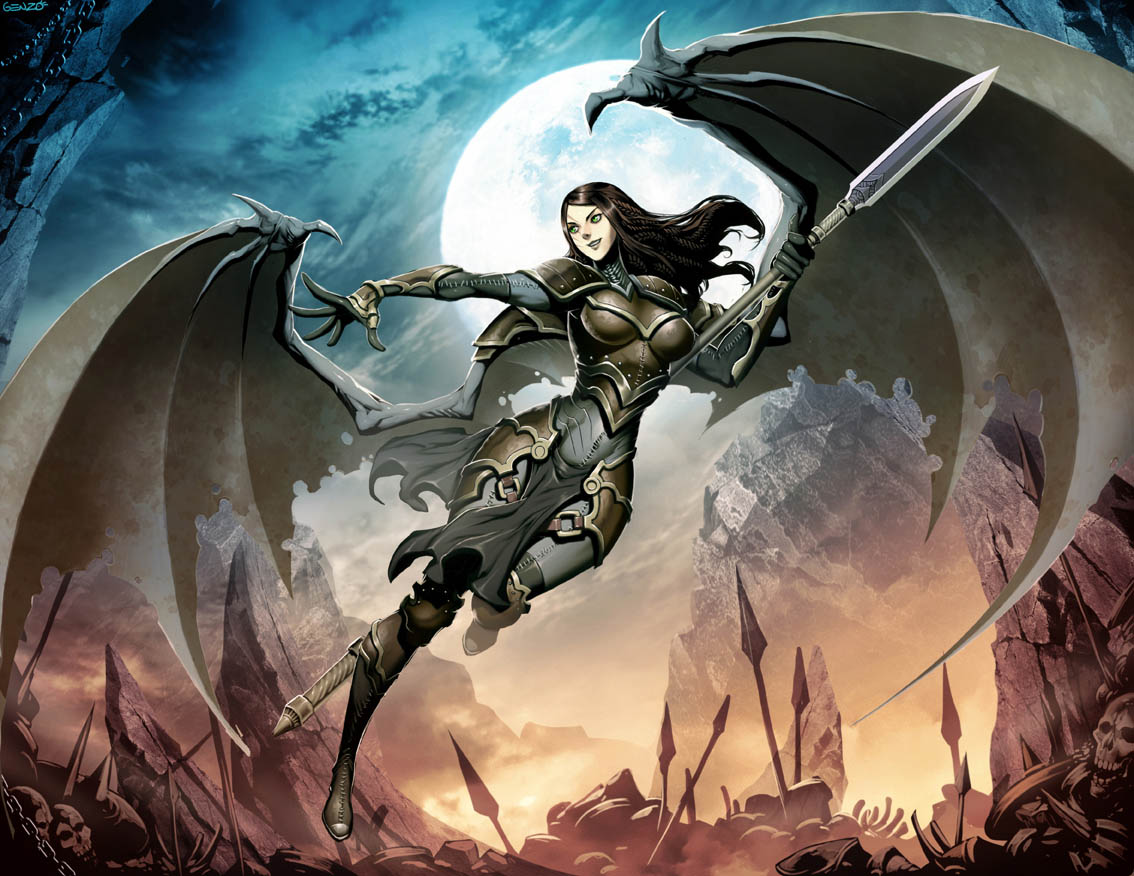
Physical Description: While a fey'ri can appear as almost any humanoid, they have a set natural form which they refer to as their "true face". Sharing the lithe bodies, pointed ears, and graceful features of a traditional elf, the fey'ri also has a number of fiendish features that belie their crossbred natures. The most pronounced of these is a set of large wings that extend from the back of their shoulders. These wings are often bat or dragon like in appearance, though some with feathers or even a velveteen coat of fur have been known, with colors for the wings varying wildly from fey'ri to fey'ri.  Other common features include horns, glowing eyes, pronounced canines, and tails of various description. (Author's Note: Using the tiefling appearance chart from the Council of Thieves Adventure Path or Blood of Fiends may be appropriate.)

Society: Where elves have kept close to nature, the fey'ri are at home in urban environments. They move easily among busy marketplaces, noble estates, and back alleys. They enjoy the subtle magics of enchantment, the skilled arts of subterfuge, and the adulation of performance. While a secretive race, it is a rare fey'ri that doesn't enjoy doing things as stylish as possible.

Relations: There are few races that a fey'ri is not willing to work with, though they normally find themselves more at home among elves, half-elves, halflings, and humans. While they enjoy the presence of gnomes, they rarely try to pass themselves off as the excitable race, claiming that it's just too much work. They also tend to avoid dwarves, but this may be more a throw back to their elven heritage, than any current difficulties with the race. The only races that they seem to have disdain for is orcs, half-orcs, and goblinoids. They find them to be barbaric brutes best suited as fodder and little else. Even the most civilized half-orc is often considered, at the very best, to be aesthetically unpleasing to the eyes.

Alignment: Natural manipulators and opportunist, most fey'ri fall along the Neutral alignments, with Chaotic Neutral and Lawful Neutral, and the occasional evil, being the most common. As a race, they rarely say that they're sorry.

Names: Fey'ri follow most elven naming conventions, though, they keep "house names" as their surnames. A house name almost serves as a clan or sect name might in some other circles. While the original house names are lost, a few of the currently used house names are Icemoon, Morningson, Phoenixwing, Shadowmoor, and Starsinger.


Fey'ri Racial Traits:

  • +2 Dexterity, +2 Intelligence, +2 Charisma, -2 Constitution. Fey'ri are quick of body and mind, and bear a powerful personal presence, but have never been able to rid themselves of the frailer aspects of their elven heritage.
  • Medium: Fey'ri are Medium creatures and have no bonuses or penalties due to their size.
  • Movement: Fey'ri have a normal land speed of 30 feet. They also have wings which grant them a flight speed of 60 feet, average maneuverability. Fly is always considered a class skill for Fey'ri.
  • Darkvision: Fey'ri have darkvision to 60ft.
  • Low-Light Vision: Fey'ri can see twice as far as humans in dim light.
  • Elf Blood: Fey'ri count as elves for any effect related to race.
  • Elven Immunities: Fey'ri have maintained the immunity of their elven ancestors, and as such are immune to magic sleep effects and get a +2 racial saving throw bonus against enchantment spells and effects.
  • Alter Self (Sp): A fey'ri can cast alter self as a spell like ability at will. The caster level is equal to the fey'ri's HD.
  • Racial Skills: Fey'ri gain a +2 racial bonus to Bluff, Perception, and Stealth skills.
  • Outsider: Fey'ri are native outsiders.
  • Mixed Blood (Ex or Sp): A fey'ri has a number of abilities granted from the sorted blood that flow through their veins. At first level a fey'ri can choose a total of 4 abilites from the list below. A fey'ri can only have one of the abilities marked with an asterisk (*). Each power can be used as described in the list. The caster level is equal to the hit dice of the fey'ri and the DCs for these abilities are Charisma based.
      • Charm Person (Sp): 1 per day. If this ability is taken a second time, it can instead be used 1 + (Int, Wis, or Cha modifier) times per day.
      • Clairaudiance/Clairvoyance (Sp): 1 per day. Each time this ability is taken, it increases the times per day by 1.
      • Damage Reduction 5/magic (Ex)*: This ability can only be taken once.
      • Darkness (Sp): 1 per day. If this ability is taken a second time, it can instead be used 1 + (Int, Wis, or Cha modifier) times per day.
      • Detect Thoughts (Sp): 1 per day. If this ability is taken a second time, it can instead be used 1 + (Int, Wis, or Cha modifier) times per day.
      • Detect Magic (Sp): 1 per day. If this ability is taken a second time, it can instead be used 3 + (Int, Wis, or Cha modifier) times per day.
      • Dimension Door (Sp)*: 1 per day. This ability cannot be taken a second time.
      • Drow or Elven Weapon Proficiency: This may only be selected once, but acts as the racial trait of either a drow or elf. A fey'ri cannot have both the drow and elven proficiency.
      • Enervation (Sp)*: 1 per day. This ability cannot be taken a second time.
      • Tainted Blood Sorcery (Ex): Fey'ri sorcerers with the Abyssal, Accursed, Boreal, Draconic,  Efreeti,  Infernal, Pestilence, Protean, Rakshasa, Shadow, Starsoul, Stormborn, or Undead bloodline can select this trait to treat their Charisma modifier as 2 higher for all sorcerer class abilities.
      • Fire Resistance 10 (Ex): This ability cannot be taken a second time.
      • Sleep (Sp): 1 per day. If this ability is taken a second time, it can instead be used 1 + (Int, Wis, or Cha modifier) times per day.
      • Suggestion (Sp): 1 per day. If this ability is taken a second time, it can instead be used 1 + (Int, Wis, or Cha modifier) times per day.
      • +2 save against Electricity (Ex)
      • +2 save against Poisons (Ex)
  • Languages: A fey'ri begins speaking Common and Elven. Fey'ri with high Intelligence scores can choose from the following: Abyssal, Aklo, Draconic, Giant, Infernal, or Sylvan.

Fey'ri of Golarion Part 2


Ah, now onto part 2. I really wanted to go for the gusto with this build up of the Fey'ri. So, I've got the stats done, now it's time for the Favored Class Options and maybe some Racial Traits. 

Fey'ri Adventurers

It is a rare fey'ri that doesn't have some training in an adventuring class. Most fey'ri have spent at least a little time as one type of rogue or another. Quite a few fey'ri also favor the arcane arts of all broad strokes. It's rare, though, to find a divinely leaning fey'ri, causing clerics and paladins among the "tainted blooded" to be an unusual find.

Alchemist - It was the desire to gain the strength to defeat all who opposed them that caused the fey'ri to branch off from the elves to begin with. It's no surprise, then, that more than a few fey'ri have started to dabble in alchemy. Mutagens are a favorite, while the odd satisfaction of a foe's reaction as the lovingly distilled poison begins its work is not lost on a fey'ri alchemist.

Barbarian -  Fey'ri rarely give in overtly to the fires that burn in their mottled blood. While a fey'ri may make use of barbarians as thugs and shock troops, it's not a role that they, themselves, favor. A fey'ri barbarian, especially one with an urban focus, is possible, but they are often looked upon with either shame or pity by the houses.

Bard - Much like their elven cousins and ancestors, fey'ri love performance in all it's varied forms. Fey'ri bards pass themselves off as elven bards as often as they can, and it is rumored that a few masterworks attributed to the elves are actually the works of a fey'ri incognito. Fey'ri bards frequently travel the width and breath of the world, not only exploring, entertaining and adventuring, but also serving to keep the lines of communication open between houses.

Cavalier - The role of a noble knight is not one lost among the fey'ri. It's uncommon, because it requires a bit more of a martial lean than what more fey'ri tend to have, but it's a role respected by the houses. Also, the prestige that a military officer can benefit a smart fey'ri in any number of ways. Fey'ri cavaliers will commonly command smaller, elite groups and strike forces, as opposed to heading massive armies.

Cleric - While most fey'ri will present a fair amount of lip service to any number of gods and god-like beings, it is truly the unique fey'ri that would willing serve one. It may be the infernal taint on the soul of the fey'ri, or it may just be a deep seated racial hubris, but to become a cleric is a role that most fey'ri would rather pass on and leave to others.

Druid - It is said that the fey'ri are no longer tied to the natural world as they once were. This is, for the most part, true. The lack of desire to bind oneself to a "god" does occasionally bleed into the attitude towards druids, but not as much as one might think at first glance. Being tied to the "world" or "the spirits" implies to a fey'ri that they are working with equals, rather than subservient to a "higher force".  A few urban druids serve the houses, as do a number of shamans of differing bent, depending on the location.

Fighter - While not as devoted to swordsmanship as their elven cousins, the fey'ri understand the beauty and need for a good blade. Fey'ri fighters prefer using elegant blades, or mastering the skills of archery, and their devotion to the warrior arts are greatly respected among the houses.

Gunslinger - Rare is the wielder of the gun among the fey'ri. Too new to have really taken root, too loud to be used subtly, and too expensive for the tastes of many fey'ri, there are very few fey'ri that are willing to pick up firearms. Those that have picked up the skills of a gunslinger are beginning to stir up quite a bit of curiosity among the houses.

Inquisitor - Possibly the only class less favored than clerics, fey'ri inquisitors are all but unheard of. Rare is the inquisitor willing to take a tainted soul such as a fey'ri under her tutelage. Rarer still is the fey'ri that would even get a chance to ask. Normally, inquisitors hunt beings like the fey'ri and they less the houses have dealings with them, the better. The few fey'ri that take up an inquisition normally server the houses and the fey'ri first and foremost and are some the house masters greatest enforcers.

Magus - Mastery of both weapon and magic, fey'ri hold close to the traditions of the magus as handed down to them from before the elves left. Most bodyguards and wandering warriors among the houses are trained as magi, and more than a few fey'ri walk among adventures and city defenders, a pinnacle of "elven training and tradition".

Monk - Not a race prone to a lot of introspection, monks are not common among the fey'ri. There are some that do find value in the search of personal perfection and enlightenment. A fey'ri monk tends towards some of the more mobile, mystically inclined, and unorthodox disciplines.

Ninja - There are no ninja among the fey'ri. Now, if you would be so kind as to tell me who it was that suggested that there might be, I would very much like to have a word with them.

Oracle - Surprisingly, oracles are actually more common among the fey'ri than clerics. Oracles among the fey'ri tend to follow mysteries that involve secrets, deception, and divination.

Paladin - There are no paladins among the fey'ri. No, seriously. If a young, idealistic fey'ri was to suddenly get it in his or her head to become a paladin, they would end up spending quite a few days having their head examined. Then they would either be directed to magus training or sent "away".

Ranger - Rangers often serve much the same role as bards, serving to keep communication flowing and exploring new locations and old ruins. While the lone rugged life of a ranger is not one that every fey'ri is accustomed to, the potential rewards can not be downplayed. A fey'ri ranger though will often favor stealth and subterfuge, instead of more open confrontations.

Rogue - Possibly the most common class among the fey'ri, even most spell casters have dappled a bit as a rogue as they grew up. The urban homes of the fey'ri and the need to hide and disguise their actions, thoughts, and motives greatly benefit for some time learning at the foot of a good cutpurse, acrobat, or similar type character.

Samurai - In lands where the tradition of samurai serve as a noble class of warriors and defenders, you will find the occasional fey'ri behind a mempo. Though some would say that the traditions of honor and duty fly in the face of the fey'ri, it would only be because one does not truly understand the fey'ri. Those same would not say such things for long, were they to suggest such openly.

Sorcerer - Another very common class, more due to the origins of the race, sorcerers of all stripes are welcomed and embraced. The only exceptions are ones with celestial, verdant, or other "high blooded" bloodlines, and even these more cause a raise of an eyebrow than any real shunning. Much like rogues, more than a few fey'ri of other classes may have a level or two of sorcerer, more because the magic is just that powerful in the blood.

Summoner - A tradition that has been with the fey'ri from the very beginning, summoners are a revered and respected group. Fey'ri summoners often have a wide variety of eidolons, some appearing as amalgamated beings thrown together from a number of different sources, while some have "idealized" forms of outsiders. Fey'ri summoners pride themselves on getting the most out of their eidolons.

Witch - Fey'ri witches find themselves in an very difficult position in fey'ri society. On one hand they feared and respected for their flexible and powerful abilities, on the other, being tied to some mysterious "patron" does make more than a few fey'ri nervous. Some fey'ri witches will go out of their way to determine the source of their magic even before making the pact, others assume that if it's something powerful enough to grant them their abilities it may be better that they just don't look into it. Fey'ri witches tend to favor "flashy" or overtly powerful patrons, some what stepping out of the norm for fey'ri culture.

Wizard - Another strong tradition among the fey'ri, wizards serve many rolls among the houses. Most wizards specialize in illusion, enchantment, or conjuration. Necromancers do occasionally rise from the ranks, but a fey'ri approaches this more with a practical, scholarly mindset, most of the time. It is also common to find elemental wizards frequently among the houses. Occasionally houses from neighboring lands will attempt to "collect" wizards from every school and tradition available to them as a sign of prestige, not an easy feat considering the small number of the race.

Favored Class Alternatives

Instead of receiving an additional skill rank or hit point whenever they gain a level in a Favored Class, fey'ri have the option of choosing from a number of other bonuses, depending upon their Favored Classes. The following options are available to all fey'ri who have the listed Favored Class, and unless otherwise stated, the bonus applies each time you select the listed Favored Class reward.

Alchemist - Add 1 minute to the duration of any mutagen the fey'ri alchemist takes.

Bard - Add 1 to the fey'ri’s total number of bardic performance rounds per day.

Magus - Add +1/4 to the Magus' arcane pool.

Ninja - Add +1/4 to the Ninja's ki pool. (That's if there really were ninja, which there aren't. I'm just saying.)

Rogue - The fey'ri gains +1/6 of a new rogue talent.

Sorcerer - Select one bloodline power at 1st level that is normally usable a number of times per day equal to 3 + the sorcerer’s Charisma modifier. The sorcerer adds +1/2 to the number of uses per day of that bloodline power.

Summoner - Add +1/4 to the eidolon’s evolution pool.

Wizard - Select one arcane school power at 1st level that is normally usable a number of times per day equal to 3 + the wizard’s Intelligence modifier. The wizard adds +1/2 to the number of uses per day of that arcane school power.

Another Primordial Dragon

It's been a bit of work to actually finish this bad boy. Odd, since this is one of my favorite dragons of all time. It's the Pit Bull of dragon kind. I actually kind of see this as the Kenpachi Zaraki of all dragons. If I was to ever play in a Council of Wyrms game, I think this is the dragon breed I'd want to play. 

Fang Dragon


Poised to pounce, this steel gray dragon is a mass of claws, blade-like scales, and fangs. Even down to the end of it's bladed tail, this dragon looks as though it was born to rend and tear. Despite the shorter wings, you are very sure that you cannot run fast enough or far enough to evade it's leap.  

CN dragon
-------------------------------
Base Statistics
-------------------------------
CR 2; Size Tiny; Hit Dice 3d12
Speed 60 ft.
Natural Armor +2; Breath Weapon Bite*, 1d2 Constitution drain
Str 12, Dex 18, Con 13, Int 7, Wis 13, Cha 7

Ecology
Environment Temperate Mountains
Organization solitary or mated pair
Treasure triple

-------------------------------
Special Abilities
-------------------------------

Breath Weapon (Su): A fang dragon does not have a "breath weapon", per say. Instead, it's bite drains the Constitution of those unfortunate enough to have been bitten by the dragon. When a fang dragon bites a target, that target must make a Fortitude save against a DC equal to what the fang dragon's breath weapon DC. A failed save takes the full Constitution damage, and a save indicates that the target only take half the Constitution damage. If the target does not have a Constitution score, the target instead takes double the amount of damage rolled as hit point damage.

Increased Damage (Ex): A fang dragon's physical weapons are always considered those of one age category higher.

Rend Magic (Su): When a Young Adult or older fang dragon hits with both claw attacks on the same target, that target takes an additional 1d6 points of damage. Also, the target is subjected to a targets dispell magic, as per the spell. The caster level for the targeted dispell is equal to the dragon's hit dice.

Sound Imitation (Ex): A very young or older fang dragon can mimic any voice or sound it has heard by making a successful Bluff check against a listener's Sense Motive check.

Spell Like Abilities (Sp): Fang Dragons gain a number of "anti-magic" spell-like abilities. Very Young - detect magic, read magic; Young - shield; Adult - spell turning; Old - telekinesis; Great Wyrm -  globe of invulnerability (can only be cast once every 1d4 hours). 


Age Category


Special Abilities


Caster Level


Wyrmling

 Increased Damage, Short Wings, Trip
---


Very Young


Sound Imitation, Detect Magic, Read Magic


---


Young

Pounce, Shield
---


Juvenile


DR 5/Magic, Spell Resistance


---


Young Adult

Frightful Presence, Rend Magic
1st


Adult

 Spell turning
3rd


Mature Adult

 DR 10/Magic
5th


Old

 Telekinesis
7th


Very Old

 DR 15/Magic
9th


Ancient


Fast Healing 2


11th


Wyrm

 DR 20/Magic
13th


Great Wyrm

 Globe of Invulnerability
15th

Fang dragons are apex predators, especially when it comes to creatures that rely heavily on magic for defense. Known to hunt through wooded foothills and mountain valleys, even other true dragons take pause before confronting a fang dragon. They are, as a whole, revel in engaging in physical conflict. They will sometimes attack foes more to test themselves than to actually kill and eat a foe.

Of all dragons, these are the most solitary, but also the most likely to work with another being that has physically beaten it. This can sometimes lead to an odd friendship, but mostly it is put in place to allow the dragon to constantly test itself against the one that defeated it. This can cause some very discomforting situations, depending on how the dragon and it's "conqueror's" attitudes match.